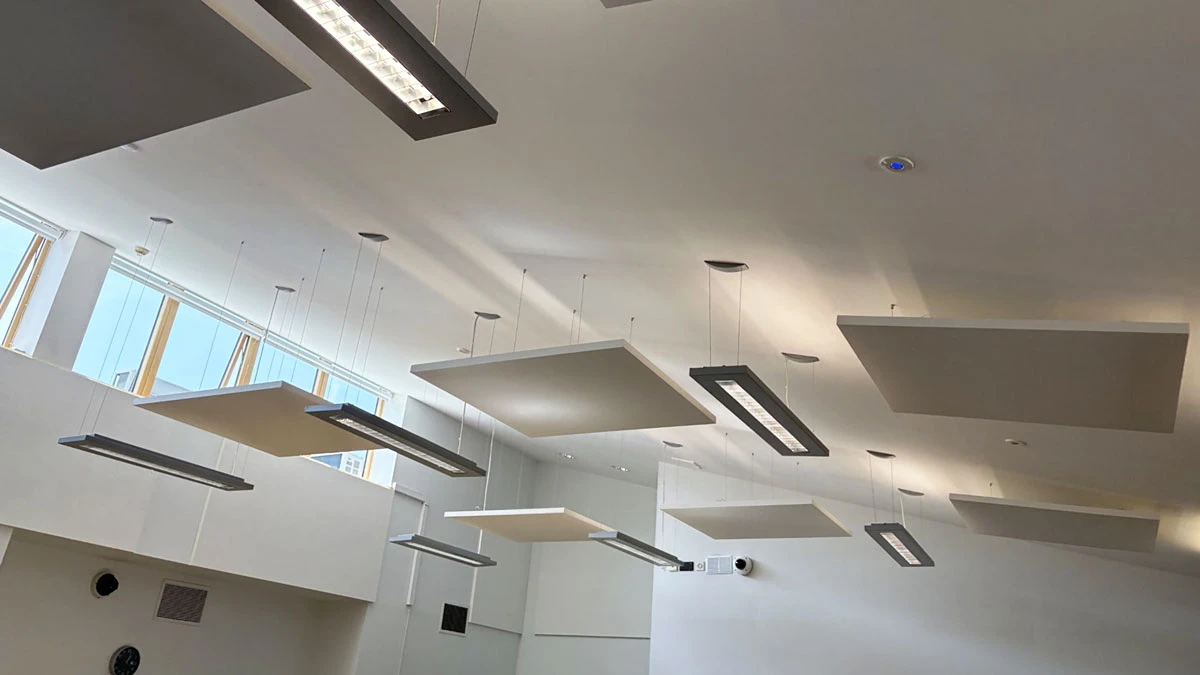
Improving acoustic clarity in a specialist healthcare environment


With a stylish crittall effect and a reeded manifestation added to the glass to match the room’s fixed glazing, this is an example of how a moveable partitioning wall can not only add flexibility to a hotel’s room space but add to the overall interior design as well.
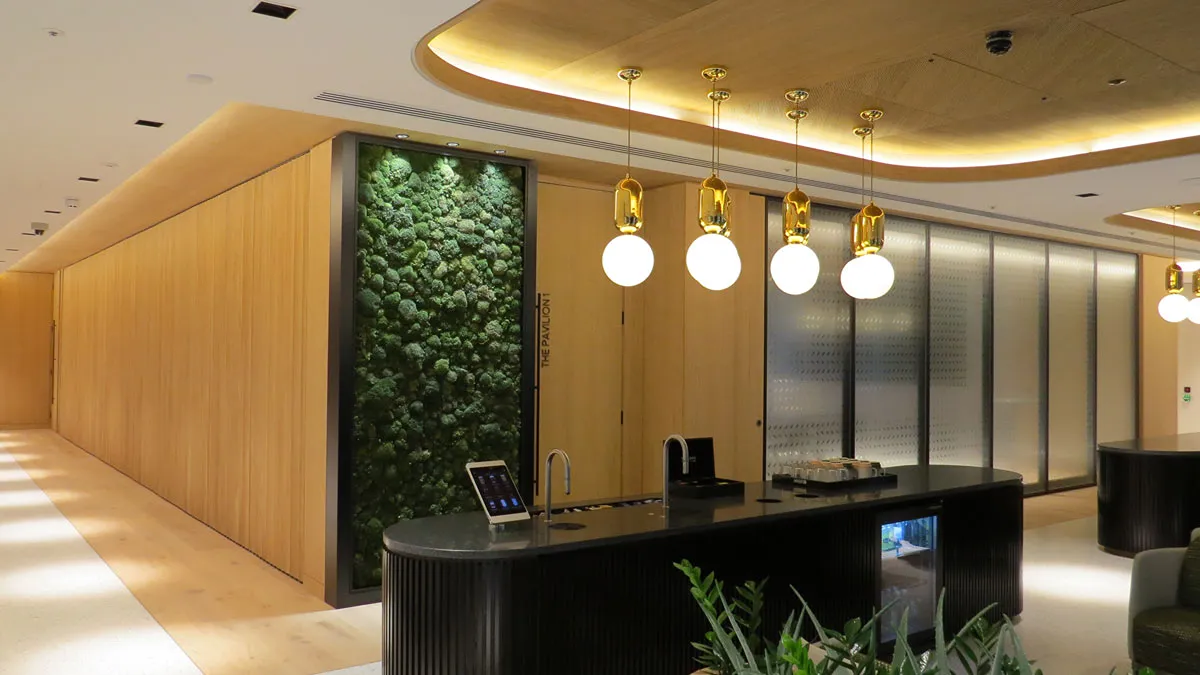
With hotels in London, Brussels, Amsterdam and most recently Manchester, Qbic Hotels is the result of a lot of thinking, debating and sketching of what a city hotel could be.
Its newest Qbic is located on Manchester’s lively Deansgate strip, with some of the city’s best bars, shops, restaurants, galleries and nightlife on its doorstep.
Working with Qbic’s own interior designers and contractor, MY Construction, Style was specified to create flexible space in the hotel’s meeting rooms – all designed to complement its breath-taking and chic room design.
With a stunning steel blue finish, glass frames and telescopic end panel, Style installed two identical Dorma Hüppe Variflex Glass movable walls, each with 52dB acoustic integrity and semi-automatic operation.
With a stylish Crittall effect and a reeded manifestation added to the glass to match the room’s fixed glazing, this is an example of how a movable partitioning wall can not only add flexibility to a hotel’s room space but contribute to the overall interior design as well.
“This hotel oozes the ‘wow’ factor,” said Andy Gibson, Style’s Director for the North.
“The movable walls are effortless to manoeuvre, enabling hotel staff to create either three separate meeting rooms, one large and one small room, or open up the entire area.
“The semi-automatic operation means the acoustic seals are always applied to the right pressure, offering high levels of privacy when meetings are in progress, and the desire for a blue steel finish in this vibrant environment was truly inspiring by Qbic’s design team and something we were proud to be able to deliver against.”
Style is the UK market leader in moveable, folding and partitioning walls and its glass partition range has expanded to offer a complete selection of acoustic and non-acoustic solutions, each available with manual, semi-automatic or fully automatic operation.
To view more projects within the hospitality sector, or browse additional case studies, please visit our website.
Talk to us about your acoustic goals — we’ll help you design a solution that sounds as good as it looks.



2026 © Style Group
HBN 00-09 sets out these surface characteristics because unsealed joints are a recognised place for moisture and micro-organisms to collect. A genuinely joint-free edge is designed to address that specific detail.
This is a surface and edge specification, not a clinical claim. Zero-joint technology has not been evaluated or certified by NHS England, and does not claim to reduce infection rates.
Food-service and guest-facing areas are typically inspected under hygiene and housekeeping standards that look closely at surfaces and joints. A seamless, moisture-resistant edge is designed with exactly that kind of scrutiny in mind.
Every one of these sectors shares the same underlying surface problem: a bonded-strip edge is a seam, and a seam is a place where dirt, moisture or wear can concentrate in a way a continuous surface can't. Zero-joint technology addresses that one structural detail across offices, schools, healthcare and hospitality settings alike — one construction detail, one shared weak point removed, four sectors that each care about it for their own reasons.
Fill in the form below and we’ll get back to you within one working day.
Fill in the form below and we’ll get back to you within one working day.
Fill in the form below and we'll get back to you as quickly as we can.
