Style group white
S icon
Hospitality
|
Movable Walls

ME Hotel

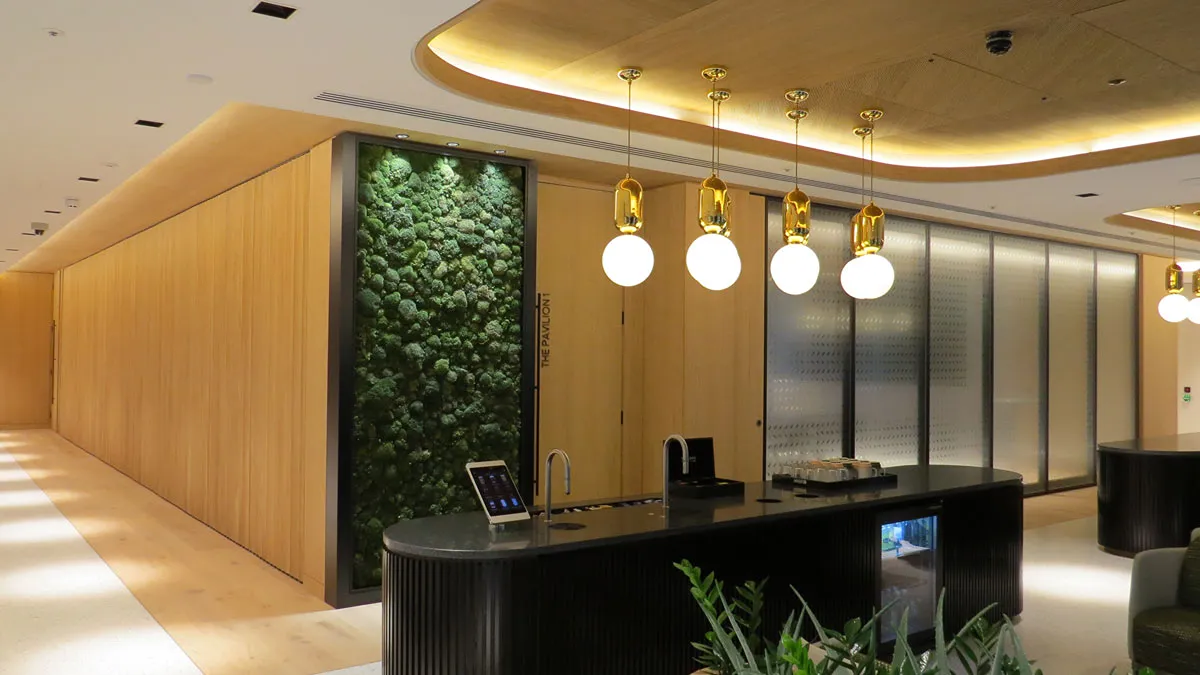
With panache, style and attention to detail of utmost importance, when Style was appointed to work with architects, Foster + Partners, and contractors, Mivan, the creation of flexible space was only part of the remit. The finish had to be perfect in order to complement the stunning interior design.

SCROLL FOR MORE
https://style-group.co.uk/wp-content/uploads/1756/72/Movable-ME-London-2012-7-optimised.webp https://style-group.co.uk/wp-content/uploads/1756/72/Movable-ME-London-2012-2-optimised.webp https://style-group.co.uk/wp-content/uploads/1756/72/Movable-ME-London-2012-3-optimised.webp https://style-group.co.uk/wp-content/uploads/1756/72/Movable-ME-London-2012-4-optimised.webp https://style-group.co.uk/wp-content/uploads/1756/72/Movable-ME-London-2012-1-optimised.webp https://style-group.co.uk/wp-content/uploads/1756/72/Movable-ME-London-2012-6-optimised.webp https://style-group.co.uk/wp-content/uploads/1756/72/Movable-ME-London-2012-8-optimised.webp

Products

Dorma Huppe

Location

London

Architect

Foster + Partners

Contractor

Mivan

Flexible Finishes Seamless Lines

With panache, style and attention to detail of utmost importance, when Style was appointed to work with architects, Foster + Partners, and contractors, Mivan, the creation of flexible space was only part of the remit. The finish had to be perfect in order to complement the stunning interior design.

A combination of wood veneer and fabric was used, with stainless steel foot plates on each panel to protect it when operated. Style also incorporated a TEF system, also known as a Flush Telescopic Panel. This gives the moveable partitioning wall a seamless line when in place without any aspect of the wall jutting out to make the final connection; a feature that makes a vast difference when the elegance of a room is vital.

Dorma Variflex was used which has the advantage of the panels being made separate to the frame. This offers far greater flexibility for stunning finishes and means that panels can be easily replaced, either if they are damaged or the interior design changes. This also offers significant cost savings by not having to replace the whole operable wall. Style also incorporated a single and double pass door, inset into the wall for access between rooms when closed.

“We are always proud to be chosen for the very highest specification jobs, when every detail of the moveable wall solution has to be perfect,” said Julian Sargent.

“The hotel sector is a very important market for us and we can offer considerable value to architects, contractors and end-user clients by developing innovative, and also breathtaking, solutions from our extensive product range.”

READY TO REDEFINE THE SOUND OF YOUR SPACE?

Talk to us about your acoustic goals — we’ll help you design a solution that sounds as good as it looks. 

2026 © Style Group

Subscribe to our newsletter

Zero-Joint Technology in the Healthcare Sector

NHS England’s Health Building Note 00-09 states clinical surfaces should be “impervious, designed for easy cleaning and free of fissures and unsealed joints.”
  • Laser-bonded, adhesive-free edge, with no seam or adhesive strip
  • Designed in line with the surface characteristics HBN 00-09 describes for clinical areas
  • Formaldehyde emissions tested significantly below the EU's REACH formaldehyde limit, in effect from 6 August 2026

Why it matters

HBN 00-09 sets out these surface characteristics because unsealed joints are a recognised place for moisture and micro-organisms to collect. A genuinely joint-free edge is designed to address that specific detail.

This is a surface and edge specification, not a clinical claim. Zero-joint technology has not been evaluated or certified by NHS England, and does not claim to reduce infection rates.

Zero-Joint Technology in the Hospitality Sector

Guest-facing spaces and food-service areas face frequent hygiene inspections and heavy daily use — seamless panels help simplify housekeeping and keep finishes looking newer for longer.
  • Seamless edge finish, with no visible transition between edge and panel surface
  • 100% adhesive-free construction — no hot-melt adhesive layer to fail
  • Edge processing on all four sides, built for daily commercial use
  • Low-maintenance and easy to clean

Why it matters

Food-service and guest-facing areas are typically inspected under hygiene and housekeeping standards that look closely at surfaces and joints. A seamless, moisture-resistant edge is designed with exactly that kind of scrutiny in mind.

Every one of these sectors shares the same underlying surface problem: a bonded-strip edge is a seam, and a seam is a place where dirt, moisture or wear can concentrate in a way a continuous surface can't. Zero-joint technology addresses that one structural detail across offices, schools, healthcare and hospitality settings alike — one construction detail, one shared weak point removed, four sectors that each care about it for their own reasons.

Zero-Joint Technology in the Education Sector

Classrooms and shared facilities see high daily footfall from children and staff, so partitioning needs to withstand daily wear and support fast, thorough cleaning.
  • Seamless, adhesive-free edge with no strip to lift or wear loose over time
  • Moisture-resistant, low-maintenance surface
  • Independently tested for VOC emissions to AgBB and EN 16516

Why it matters

Schools see some of the highest footfall of any building type relative to their size, and surface durability directly affects how long fittings stay presentable between refurbishment cycles. A seam-free edge that can't lift or peel with repeated impact and cleaning is a genuinely lower-maintenance fixture over the life of the building.

Zero-Joint Technology in the Corporate Sector

Open-plan offices and meeting suites see constant daily use — surfaces need to look sharp for years without high maintenance.
  • Seamless edge finish, with no visible transition between edge and panel surface
  • 100% adhesive-free construction — no hot-melt adhesive layer to fail
  • Edge processing on all four sides, built for daily commercial use
  • Low-maintenance and easy to clean

Why it matters

An adhesive seam is one of the few places on a standard partition edge where dust, spillage residue or cleaning-product build-up can collect, simply because it isn't a flat, continuous surface. Removing that seam removes that particular weak point — a lower-maintenance fixture designed to stay looking sharp for longer.

Prefer to Write?

Fill in the form below and we’ll get back to you within one working day.

Apply Now

Fill in the form below and we’ll get back to you within one working day.

    Book a CPD with us

    Fill in the form below and we'll get back to you as quickly as we can.

    Download pdf icon

    Download

    Would you like to be contacted?