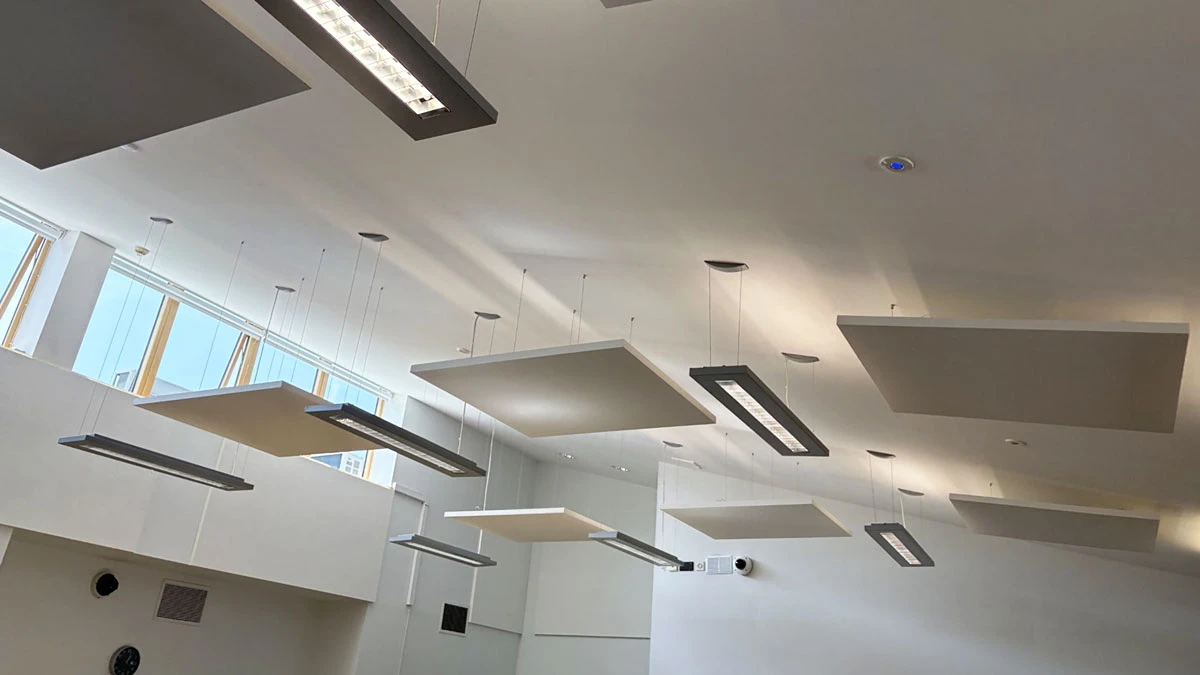
Improving acoustic clarity in a specialist healthcare environment


Offering clean lines, the greatest use of glass and minimal metal, DORMA Varitrans Metalline was chosen with toughened safety glass. This was complemented with DORMA Moveo Glass, with its semi automatic, comfortronic seals and pass doors.
Flexible space is essential in any educational establishment. At the University of Westminster, Style was specified to install 4 different arrangements to sub-divide space in the coffee shop, an eating platform, a lobby used for multiple activities and the book shop.
Working with contractor, Vinci Construction, and architect, GHM Rock Townsend, a combination of DORMA Varitrans and Moveo Glass met the University’s requirements perfectly; for functionality, flexibility, ease of manoeuvre, the maximising of light and interior design.
Offering clean lines, the greatest use of glass and minimal metal, DORMA Varitrans Metalline was chosen with toughened safety glass. This was complemented with DORMA Moveo Glass, with its semi automatic, comfortronic seals and pass doors.
The combination of moveable walls not only offered flexible, and multiple, use of campus space for varying activities, it also provided a mechanism to securely close off the retail units (i.e. coffee shop and bookshop at night) yet with unimpeded views of the facilities.
“This is not only a stunning installation from a design perspective, it’s also a very practical one,” said Style’s managing director, Julian Sargent. “The Varitrans Metalline system is ideal when you wish to maximise light, have very clean walls that make the very most of the glass, yet do not need to form an acoustic barrier.”
“We continue to offer the education sector a vast array of solutions and finishes, from vertically rising partitioning systems which are ideal for stepped lecture theatres through to simple folding walls for village schools. As a result, specifications continue to soar, reflecting the added value we can bring.”
Talk to us about your acoustic goals — we’ll help you design a solution that sounds as good as it looks.



2026 © Style Group
HBN 00-09 sets out these surface characteristics because unsealed joints are a recognised place for moisture and micro-organisms to collect. A genuinely joint-free edge is designed to address that specific detail.
This is a surface and edge specification, not a clinical claim. Zero-joint technology has not been evaluated or certified by NHS England, and does not claim to reduce infection rates.
Food-service and guest-facing areas are typically inspected under hygiene and housekeeping standards that look closely at surfaces and joints. A seamless, moisture-resistant edge is designed with exactly that kind of scrutiny in mind.
Every one of these sectors shares the same underlying surface problem: a bonded-strip edge is a seam, and a seam is a place where dirt, moisture or wear can concentrate in a way a continuous surface can't. Zero-joint technology addresses that one structural detail across offices, schools, healthcare and hospitality settings alike — one construction detail, one shared weak point removed, four sectors that each care about it for their own reasons.
Fill in the form below and we’ll get back to you within one working day.
Fill in the form below and we’ll get back to you within one working day.
Fill in the form below and we'll get back to you as quickly as we can.
