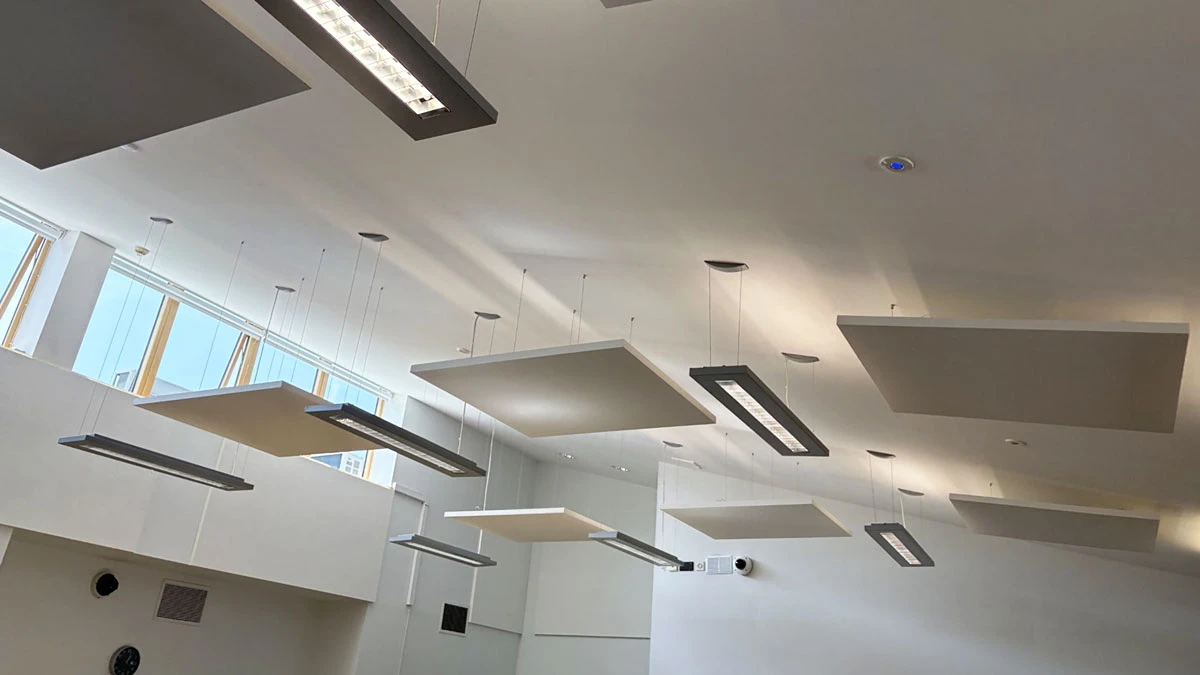
Improving acoustic clarity in a specialist healthcare environment


IG created the concept of financial spread betting, enabling clients to deal on the price of gold as an index rather than trading the commodity itself. It now has over 152,600 clients worldwide, making millions of transactions per month.
Working walls
London
Sheppard Robson
BW Interiors
IG created the concept of financial spread betting, enabling clients to deal on the price of gold as an index rather than trading the commodity itself. It now has over 152,600 clients worldwide, making millions of transactions per month.
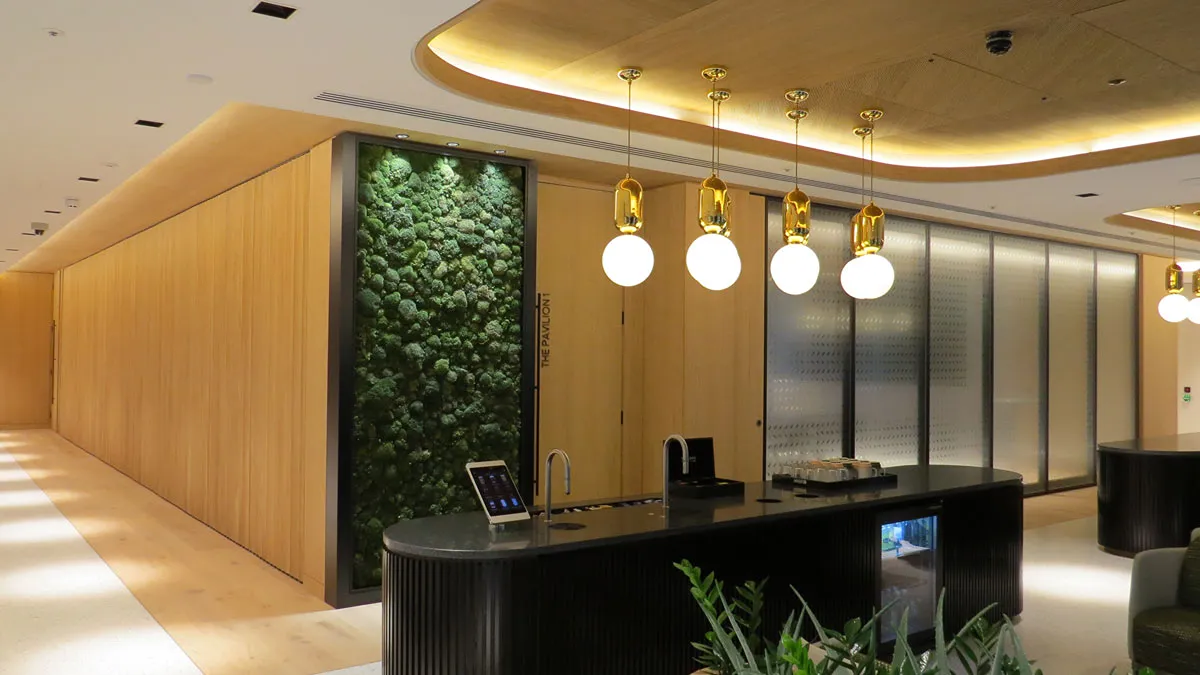
At its office in London, Style was approached by IG Group’s architects’ Sheppard Robson who were working with BW Interiors to create flexible, collaborative office space.
The requirement was challenging as it hadn’t been done before, leaving no previous template to work from.
Quite simply, IG Group was seeking informal collaborative meeting spaces where anything from 2 to 20 people could gather. Based in an open plan area, employees would gather to discuss ideas or share information, with the ability to screen themselves off and use the walls as magnetic writeable white boards.
But the spec didn’t end there! Quite often teams would be gathered in small breakout units but working on the same project as others in the area. They therefore needed to share their ideas with others, creating an additional requirement to spin the panels round so that others could see what was on the white boards – effectively bringing them into the discussion.
Julian Sargent, Style’s group managing director explains the challenge this posed.
“We really had to put a lot of thought into this. Not only was it something never done before, we also didn’t have a product that met this very unique and innovative requirement.
“We therefore had to design and manufacturer the panels from scratch. Our technical teams also had to devise the best way to enable them to move freely, yet be secure when still and rotate when necessary.
“The final solution, however, is so ingenious that we’re already seeing orders for the same system from other major PLCs who can see what a difference this will make to how their staff work together during informal breakout sessions and meetings.”
Talk to us about your acoustic goals — we’ll help you design a solution that sounds as good as it looks.



2026 © Style Group
HBN 00-09 sets out these surface characteristics because unsealed joints are a recognised place for moisture and micro-organisms to collect. A genuinely joint-free edge is designed to address that specific detail.
This is a surface and edge specification, not a clinical claim. Zero-joint technology has not been evaluated or certified by NHS England, and does not claim to reduce infection rates.
Food-service and guest-facing areas are typically inspected under hygiene and housekeeping standards that look closely at surfaces and joints. A seamless, moisture-resistant edge is designed with exactly that kind of scrutiny in mind.
Every one of these sectors shares the same underlying surface problem: a bonded-strip edge is a seam, and a seam is a place where dirt, moisture or wear can concentrate in a way a continuous surface can't. Zero-joint technology addresses that one structural detail across offices, schools, healthcare and hospitality settings alike — one construction detail, one shared weak point removed, four sectors that each care about it for their own reasons.
Fill in the form below and we’ll get back to you within one working day.
Fill in the form below and we’ll get back to you within one working day.
Fill in the form below and we'll get back to you as quickly as we can.
