Style group white
S icon
Corporate
|
Movable Walls, Working Walls

Hewlett Packard

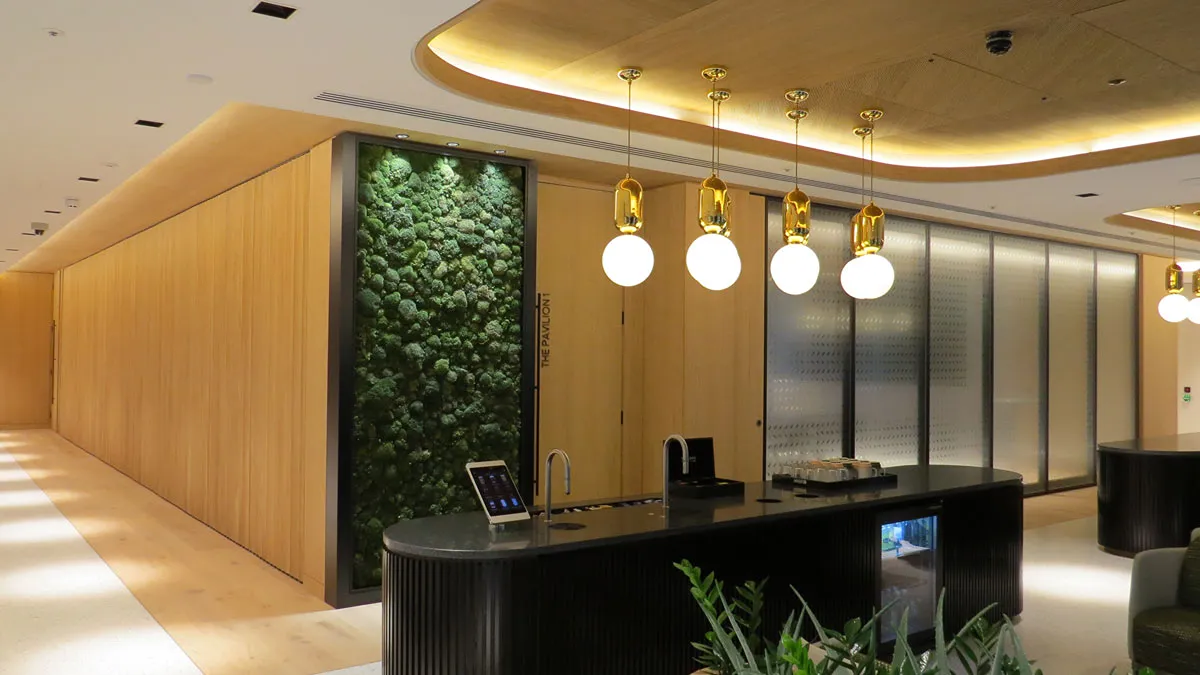
Located in the heart of Winnersh Triangle, The 210 Building is a contemporary, inspiring 62,000 sq ft newly refurbished office, of which 31,000 sq ft was let to Hewlett Packard Enterprise who relocated in 2020.

SCROLL FOR MORE
https://style-group.co.uk/wp-content/uploads/2025/09/StyleGroup_HP1.webp https://style-group.co.uk/wp-content/uploads/2025/09/StyleGroup_HP2.webp https://style-group.co.uk/wp-content/uploads/2025/09/StyleGroup_HP3.webp https://style-group.co.uk/wp-content/uploads/2025/09/StyleGroup_HP4.webp https://style-group.co.uk/wp-content/uploads/2025/09/StyleGroup_HP5.webp https://style-group.co.uk/wp-content/uploads/2025/09/StyleGroup_HP6.webp https://style-group.co.uk/wp-content/uploads/2025/09/StyleGroup_HP7.webp https://style-group.co.uk/wp-content/uploads/2025/09/StyleGroup_HP8.webp https://style-group.co.uk/wp-content/uploads/2025/09/StyleGroup_HP9.webp

Products

Dorma Huppe & Working Walls

Location

Reading

Architect

Perkins and Will

Contractor

BW Construction

Hewlett Packard Enterprise | Flexible Office with Movable Walls

Working alongside Perkins&Will and BW Construction, Style Group delivered a versatile meeting and collaboration suite for Hewlett Packard Enterprise at The 210 Building in Winnersh Triangle.

The installation was designed to support the evolving needs of a modern workplace, allowing meeting rooms and training areas to be reconfigured quickly throughout the day. By combining 52dB Dorma Hüppe Variflex Glass semi-automatic movable walls, 55dB solid Variflex semi-automatic movable walls and Style Group’s innovative Working Wall pivot panels, the space can be transformed from four individual meeting rooms into larger collaborative areas with ease.

The glazed and solid movable walls provide an ideal balance of transparency, privacy and acoustic performance, while maintaining an open, light-filled environment. Fabric and writable whiteboard finishes further enhance the functionality of the space, creating practical surfaces for presentations, brainstorming sessions and collaborative working.

Style Group’s Working Wall pivot panels add another level of flexibility, enabling teams to adapt the workspace to suit changing requirements throughout the day. The result is a contemporary office environment that encourages collaboration while providing the acoustic separation required for focused meetings and training sessions.

The completed installation delivers a flexible, future-ready workspace that enables Hewlett Packard Enterprise to maximise the use of its office while supporting a wide range of working styles. Discover more about our movable walls, glass partitions and corporate workspace solutions.

READY TO REDEFINE THE SOUND OF YOUR SPACE?

Talk to us about your acoustic goals — we’ll help you design a solution that sounds as good as it looks. 

2026 © Style Group

Subscribe to our newsletter

Zero-Joint Technology in the Healthcare Sector

NHS England’s Health Building Note 00-09 states clinical surfaces should be “impervious, designed for easy cleaning and free of fissures and unsealed joints.”
  • Laser-bonded, adhesive-free edge, with no seam or adhesive strip
  • Designed in line with the surface characteristics HBN 00-09 describes for clinical areas
  • Formaldehyde emissions tested significantly below the EU's REACH formaldehyde limit, in effect from 6 August 2026

Why it matters

HBN 00-09 sets out these surface characteristics because unsealed joints are a recognised place for moisture and micro-organisms to collect. A genuinely joint-free edge is designed to address that specific detail.

This is a surface and edge specification, not a clinical claim. Zero-joint technology has not been evaluated or certified by NHS England, and does not claim to reduce infection rates.

Zero-Joint Technology in the Hospitality Sector

Guest-facing spaces and food-service areas face frequent hygiene inspections and heavy daily use — seamless panels help simplify housekeeping and keep finishes looking newer for longer.
  • Seamless edge finish, with no visible transition between edge and panel surface
  • 100% adhesive-free construction — no hot-melt adhesive layer to fail
  • Edge processing on all four sides, built for daily commercial use
  • Low-maintenance and easy to clean

Why it matters

Food-service and guest-facing areas are typically inspected under hygiene and housekeeping standards that look closely at surfaces and joints. A seamless, moisture-resistant edge is designed with exactly that kind of scrutiny in mind.

Every one of these sectors shares the same underlying surface problem: a bonded-strip edge is a seam, and a seam is a place where dirt, moisture or wear can concentrate in a way a continuous surface can't. Zero-joint technology addresses that one structural detail across offices, schools, healthcare and hospitality settings alike — one construction detail, one shared weak point removed, four sectors that each care about it for their own reasons.

Zero-Joint Technology in the Education Sector

Classrooms and shared facilities see high daily footfall from children and staff, so partitioning needs to withstand daily wear and support fast, thorough cleaning.
  • Seamless, adhesive-free edge with no strip to lift or wear loose over time
  • Moisture-resistant, low-maintenance surface
  • Independently tested for VOC emissions to AgBB and EN 16516

Why it matters

Schools see some of the highest footfall of any building type relative to their size, and surface durability directly affects how long fittings stay presentable between refurbishment cycles. A seam-free edge that can't lift or peel with repeated impact and cleaning is a genuinely lower-maintenance fixture over the life of the building.

Zero-Joint Technology in the Corporate Sector

Open-plan offices and meeting suites see constant daily use — surfaces need to look sharp for years without high maintenance.
  • Seamless edge finish, with no visible transition between edge and panel surface
  • 100% adhesive-free construction — no hot-melt adhesive layer to fail
  • Edge processing on all four sides, built for daily commercial use
  • Low-maintenance and easy to clean

Why it matters

An adhesive seam is one of the few places on a standard partition edge where dust, spillage residue or cleaning-product build-up can collect, simply because it isn't a flat, continuous surface. Removing that seam removes that particular weak point — a lower-maintenance fixture designed to stay looking sharp for longer.

Prefer to Write?

Fill in the form below and we’ll get back to you within one working day.

Apply Now

Fill in the form below and we’ll get back to you within one working day.

    Book a CPD with us

    Fill in the form below and we'll get back to you as quickly as we can.

    Download pdf icon

    Download

    Would you like to be contacted?